
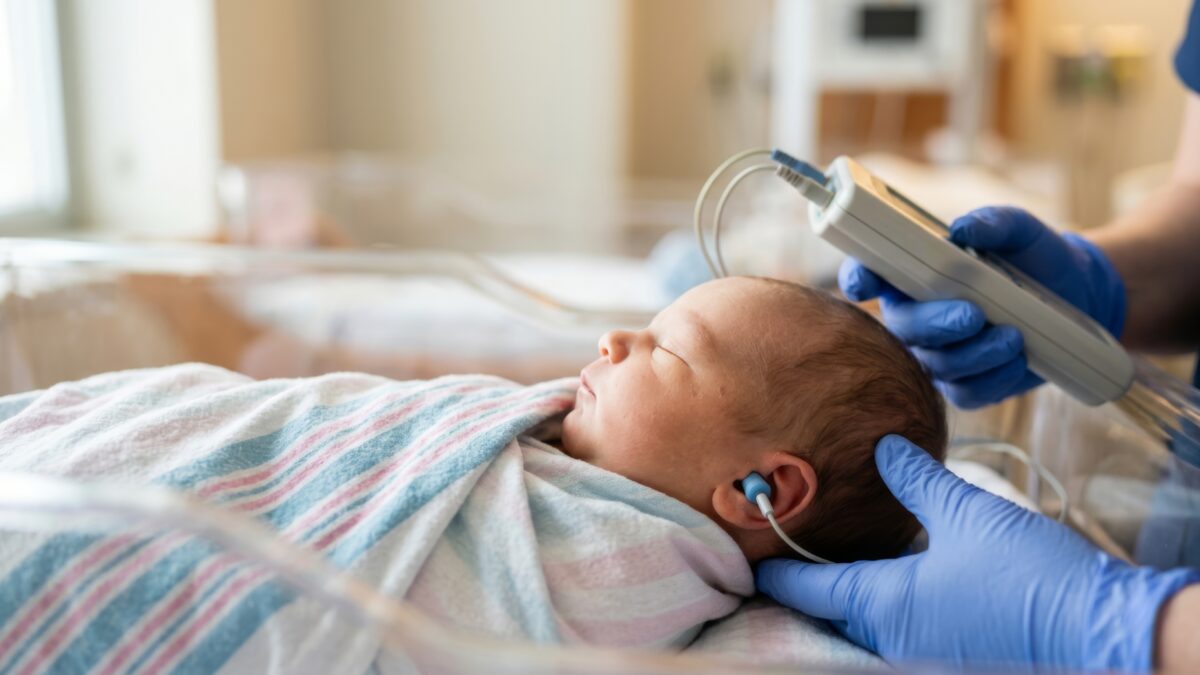
June marked National Cytomegalovirus, or CMV, Awareness Month, bringing much-needed attention to a condition that remains unfamiliar to many families despite being one of the leading causes of birth defects in the United States. While the awareness month has ended, the need to educate families, improve newborn screening and expand access to early intervention continues throughout the year.
Congenital CMV occurs when a pregnant person passes the common cytomegalovirus to their developing baby. For most healthy adults, CMV causes few or no symptoms. During pregnancy, however, the virus can lead to pregnancy loss, developmental disabilities and lifelong medical conditions for the baby. According to the National CMV Foundation, congenital CMV affects approximately one in every 200 newborns and is the most common infectious cause of birth defects in the United States. Hearing loss is among its most common long-term effects.
Why Screening Is Critical
The first few weeks of life present a critical opportunity to identify congenital CMV. Because diagnosis must occur within the first 21 days after birth to confirm congenital infection, timely newborn screening allows clinicians to monitor infants closely and begin interventions that may improve developmental outcomes. The National CMV Foundation’s newborn screening resources highlight how early identification can connect families to hearing evaluations, developmental services and appropriate medical follow-up before symptoms worsen.
Unfortunately, screening practices vary widely depending on where a baby is born. As the National CMV Foundation notes, a child’s ZIP code should not determine whether they have the opportunity for an early diagnosis.
Expanding Access to Screening
Awareness alone is not enough to improve outcomes. Policies that expand newborn screening, strengthen clinician education and support research can help ensure more infants receive timely diagnoses and appropriate care. One example is the bipartisan Stop CMV Act, which would encourage hospitals to screen infants for congenital CMV within 21 days of birth while supporting data collection, research and clinician training.
Congenital CMV Awareness Month may be over, but the work is far from finished. Continued education, expanded screening and evidence-based policy can help more children receive the early care they need to reach their full potential.